
Why Artillery Shells Became a Strategic Commodity
The war in Ukraine exposed how few 155mm rounds Western industry could make. Governments are now paying to rebuild capacity that was allowed to shrink.
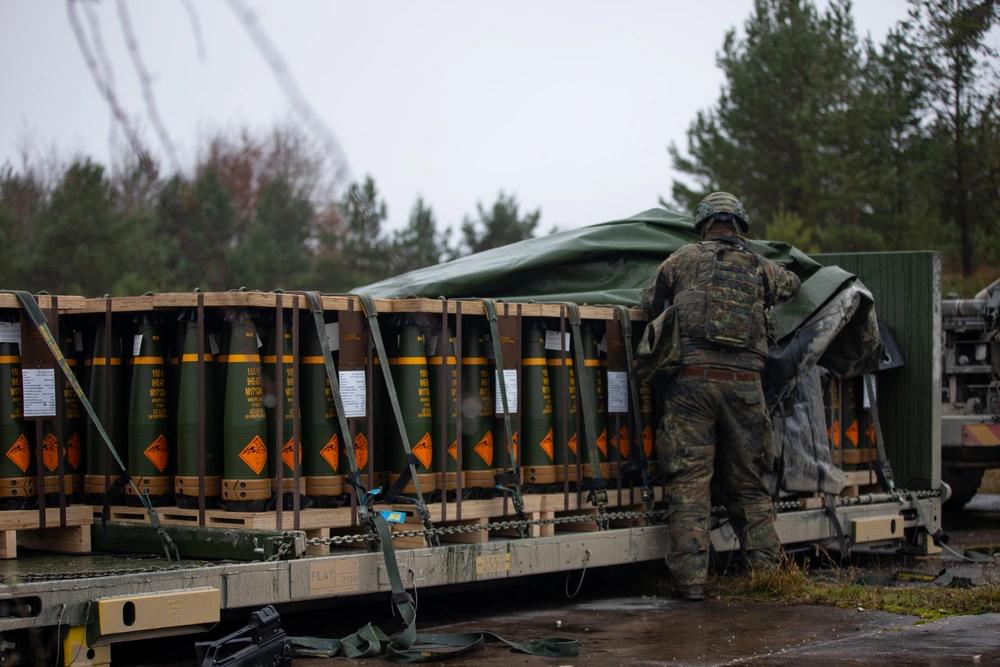
For decades, Western militaries planned for short, high-technology wars. Stockpiles of basic munitions, and the factories that make them, shrank accordingly. The full-scale war in Ukraine reversed that assumption: artillery became one of the defining weapons of the conflict, and consumption of 155mm shells outstripped what Western industry could produce.
Europe's response
The European Union launched the Act in Support of Ammunition Production (ASAP), a program that uses EU funds to help manufacturers expand capacity for ammunition and missiles. The European Commission describes it as a way to ramp up production, ease supply-chain bottlenecks and build reserves.
Why capacity is slow
A shell is simple compared with a missile, but production depends on chains that are hard to expand quickly: steel forgings, explosives such as TNT and RDX, propellant, and fuzes. Each requires specialized plants and permits, and companies are reluctant to invest without long-term contracts.
What it means
- For defense companies: multi-year contracts have become the main currency of capacity expansion.
- For governments: stockpiles are again treated as strategic reserves, not inventory to be minimized.
- For readers of announcements: production targets are goals, not deliveries. WARTOON NEWS distinguishes between capacity announced, capacity built and rounds delivered.
Demonstration content showing the Analysis format.
Sources
- 1.ASAP: Boosting defence production
European Commission · Official / government · Accessed November 24, 2026
Spotted an error? Request a correction. Read our editorial standards.